
2025 Year in Review
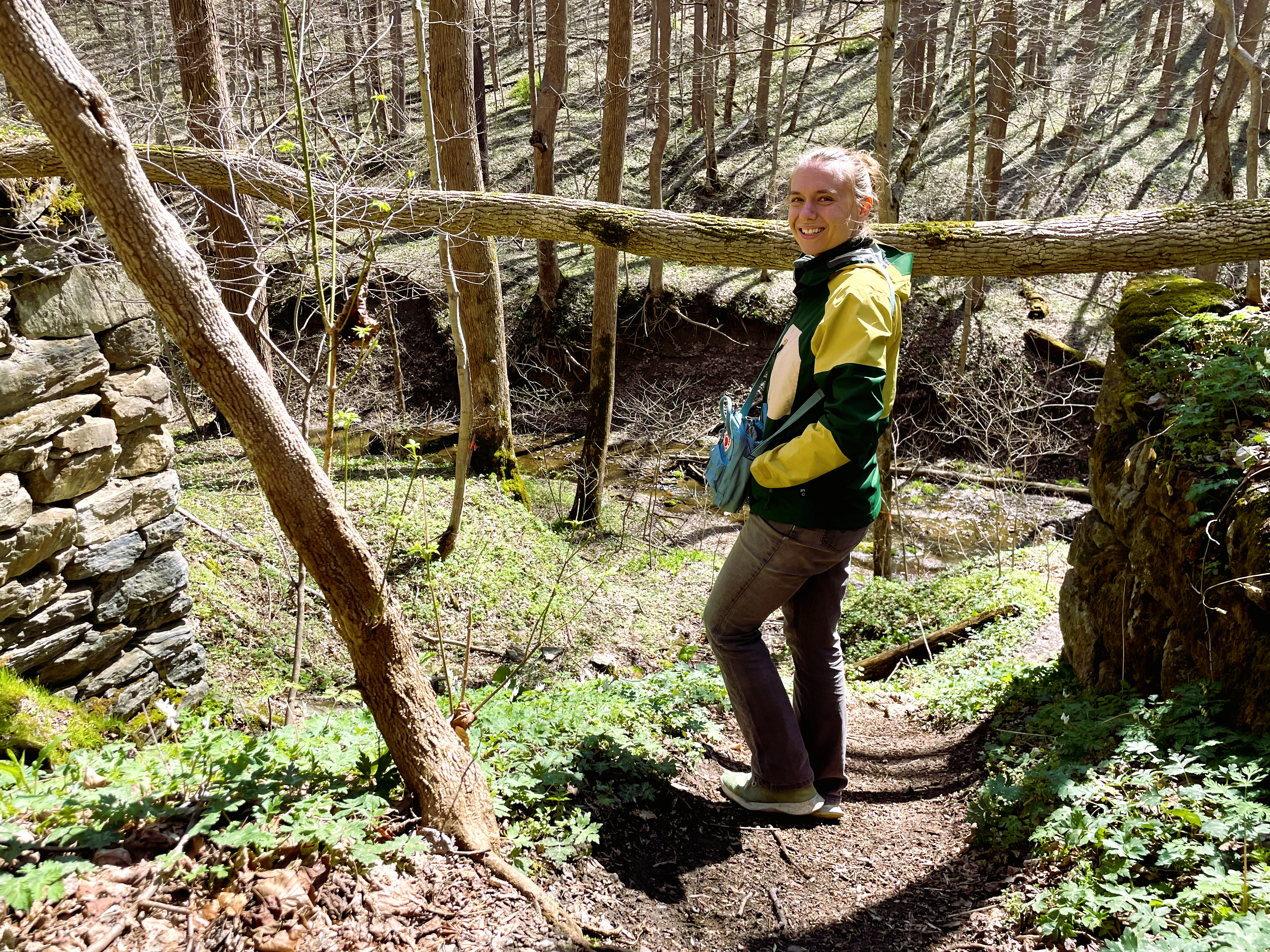
This past growing season with Feather and Fern Wildscapes was busy and exciting! We’ve installed gardens, maintained established ones, and loved every minute of it! We took advantage of the growing season out in the wild too, hiking to see the native plants in their natural habitats. This always brings new inspiration and insight to us for future projects. While out observing native plants in the wild, we document locations, habitats, site conditions, and life cycles of the species. Citizen science data provides important information on wild populations for the scientists working to conserve the natural world!
As we bid farewell to 2025, Feather and Fern wanted to share our favorite observations this year.
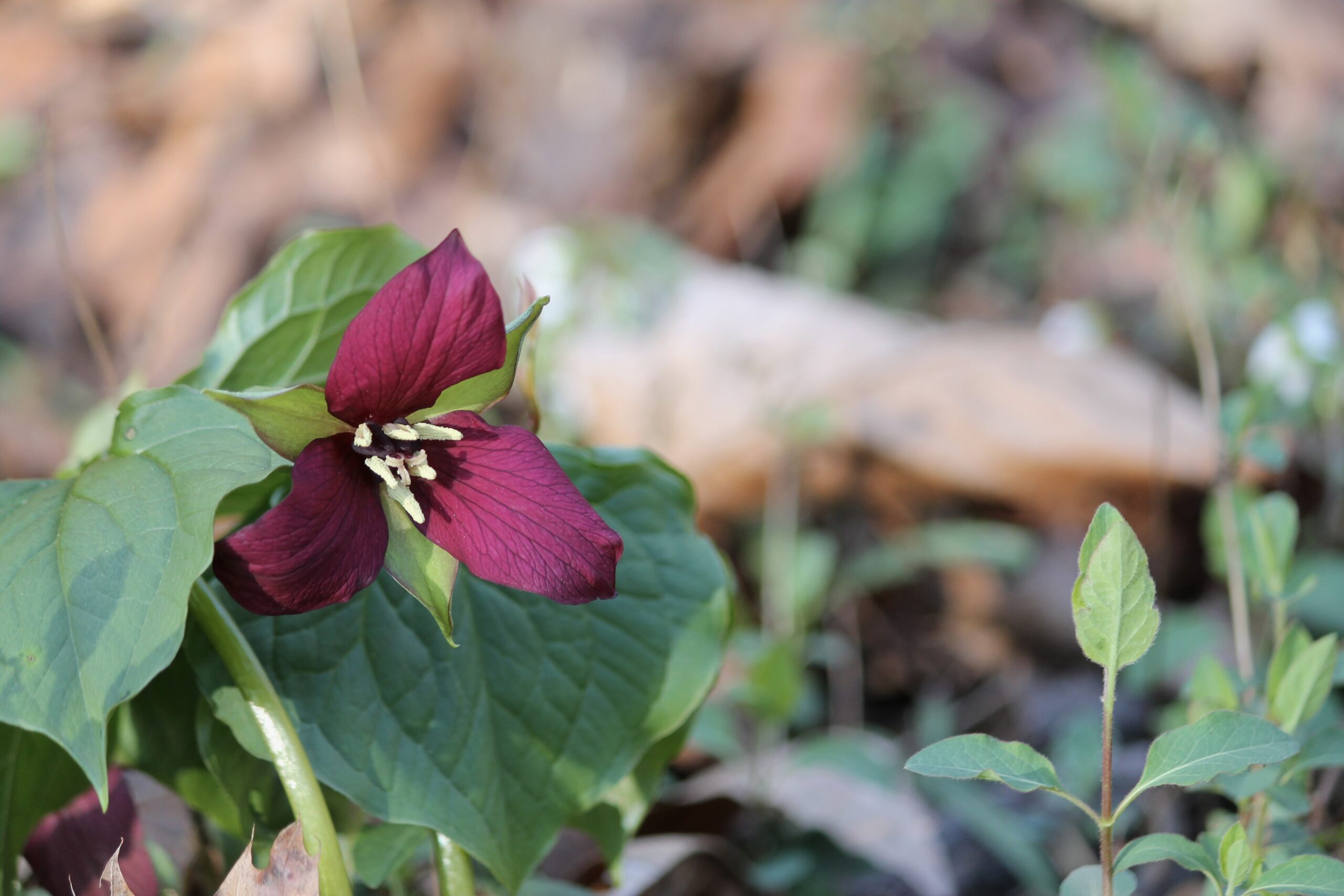
Red Trillium
In the early spring, Shelby and Farren ventured out to search for ephemeral species and made lots of observations! A memorable find was a population of red trillium (Trillium erectum). Trillium species take more than five years to flower for the first time, so these populations represent determination! This species is fondly referred to as stinking Benjamin because it emits a foul smell to attract pollinators, like flies.1 Red trillium is striking to see in the wild, with vibrant shades of red amongst the remnants of winter. You can read more about Shelby and Farren’s adventures in another blog post, Treasures of Spring.
American Mink
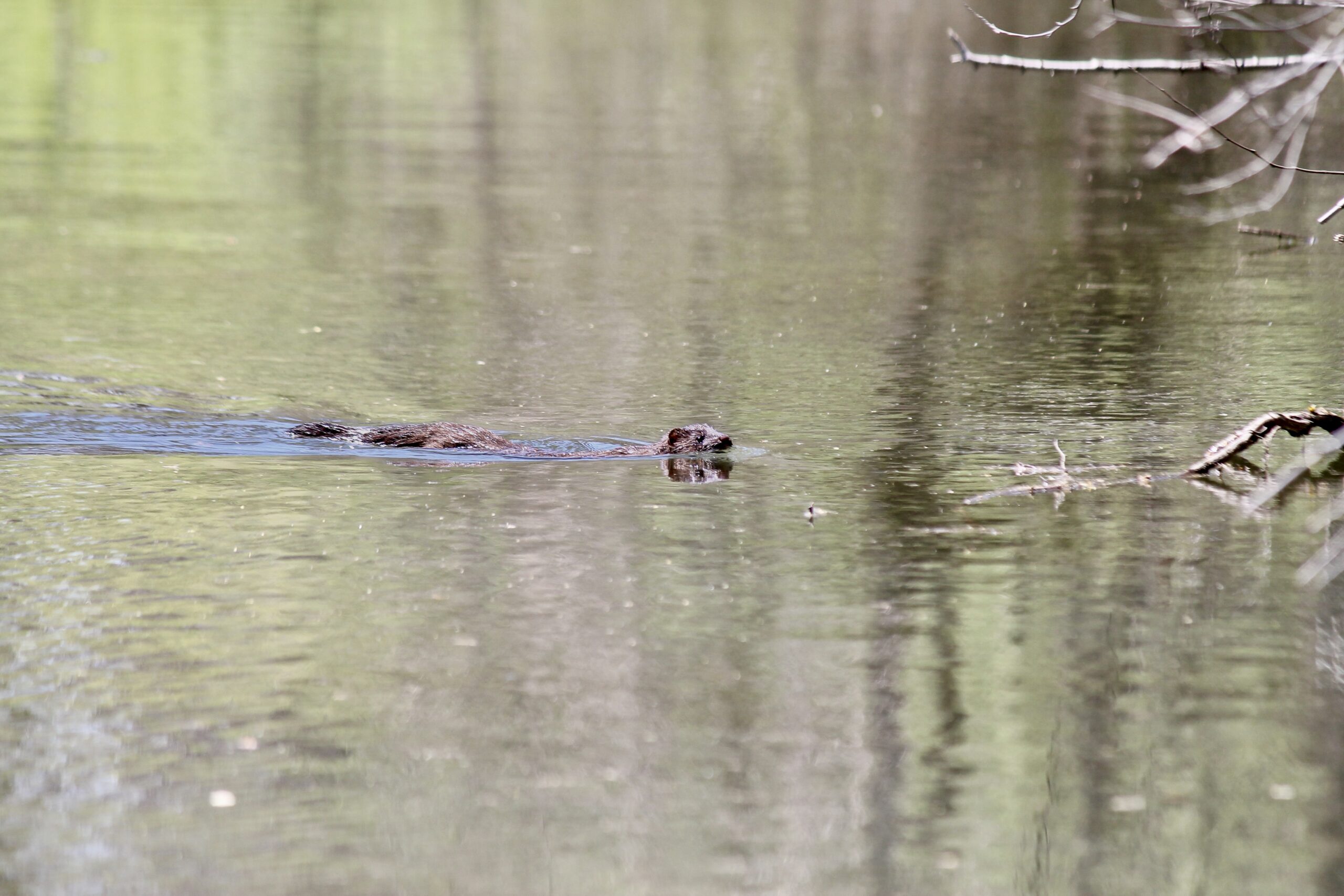
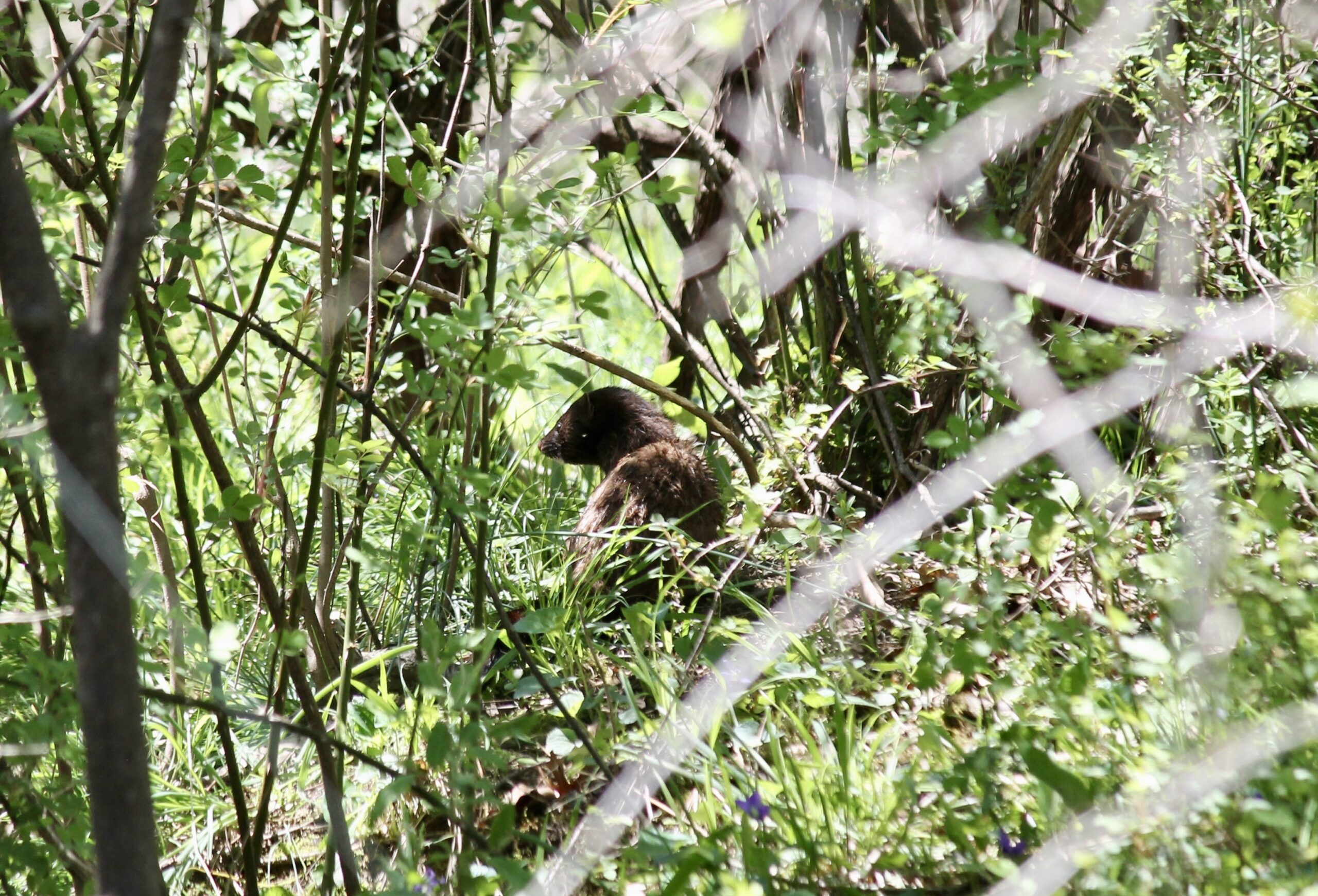
While fishing with her husband at a local state park in April, Farren spotted an American mink (Neogale vison) crossing the creek! This creature moved quietly and confidently through the water. Minks are very stealthy and it is easy to miss them. That makes their sightings even more exciting! Minks are typically solitary animals living near water. They are fierce predators whose prey includes mice, muskrats, rabbits, frogs, crayfish, and more.2 Since they live and forage around water, minks are built to be excellent swimmers. They have webbed feet, long tails, and thick, water-resistant fur to glide and dive through the water.3 Watching and photographing this mink was an awesome memory!
Climbing Milkvine
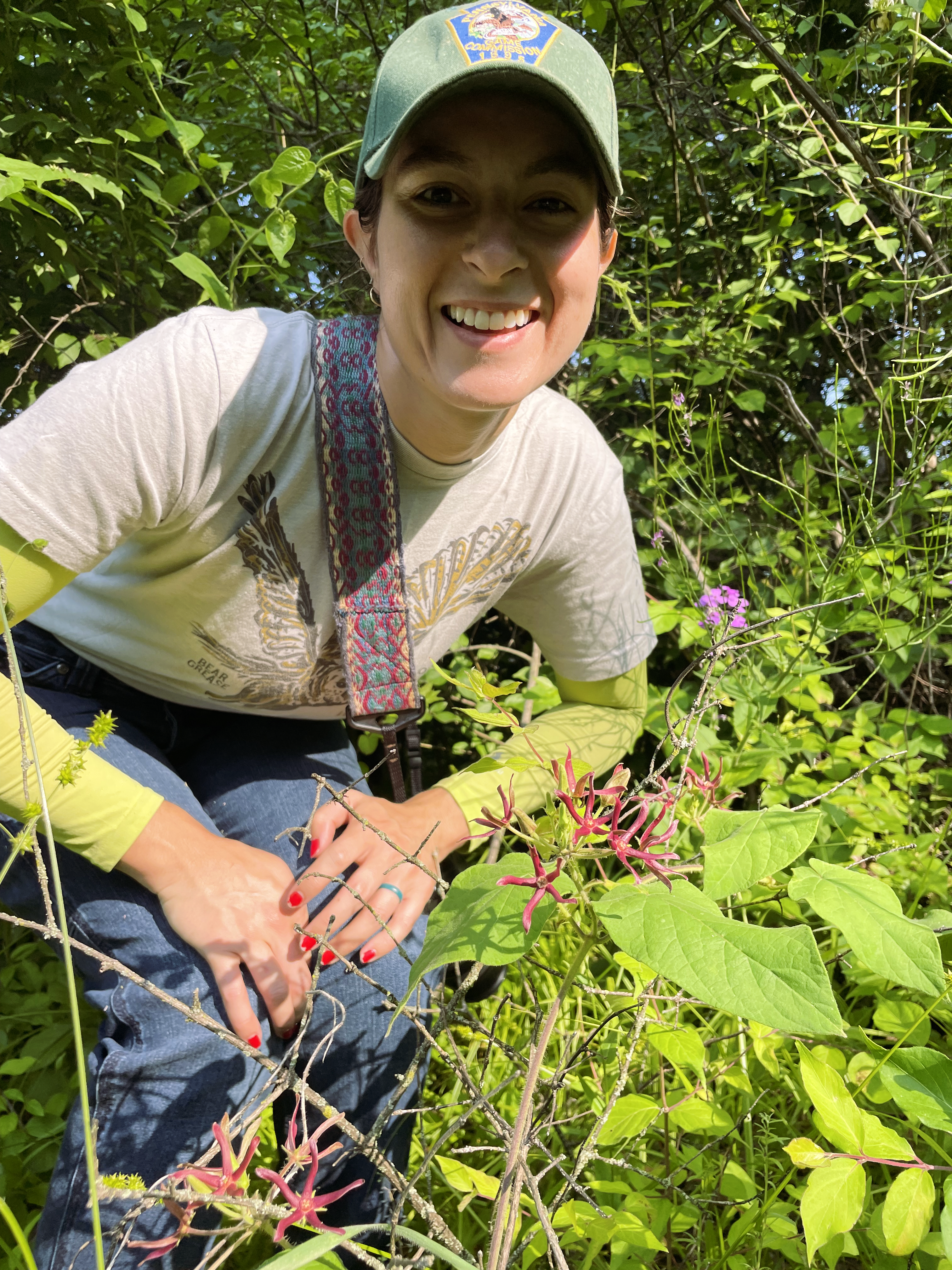
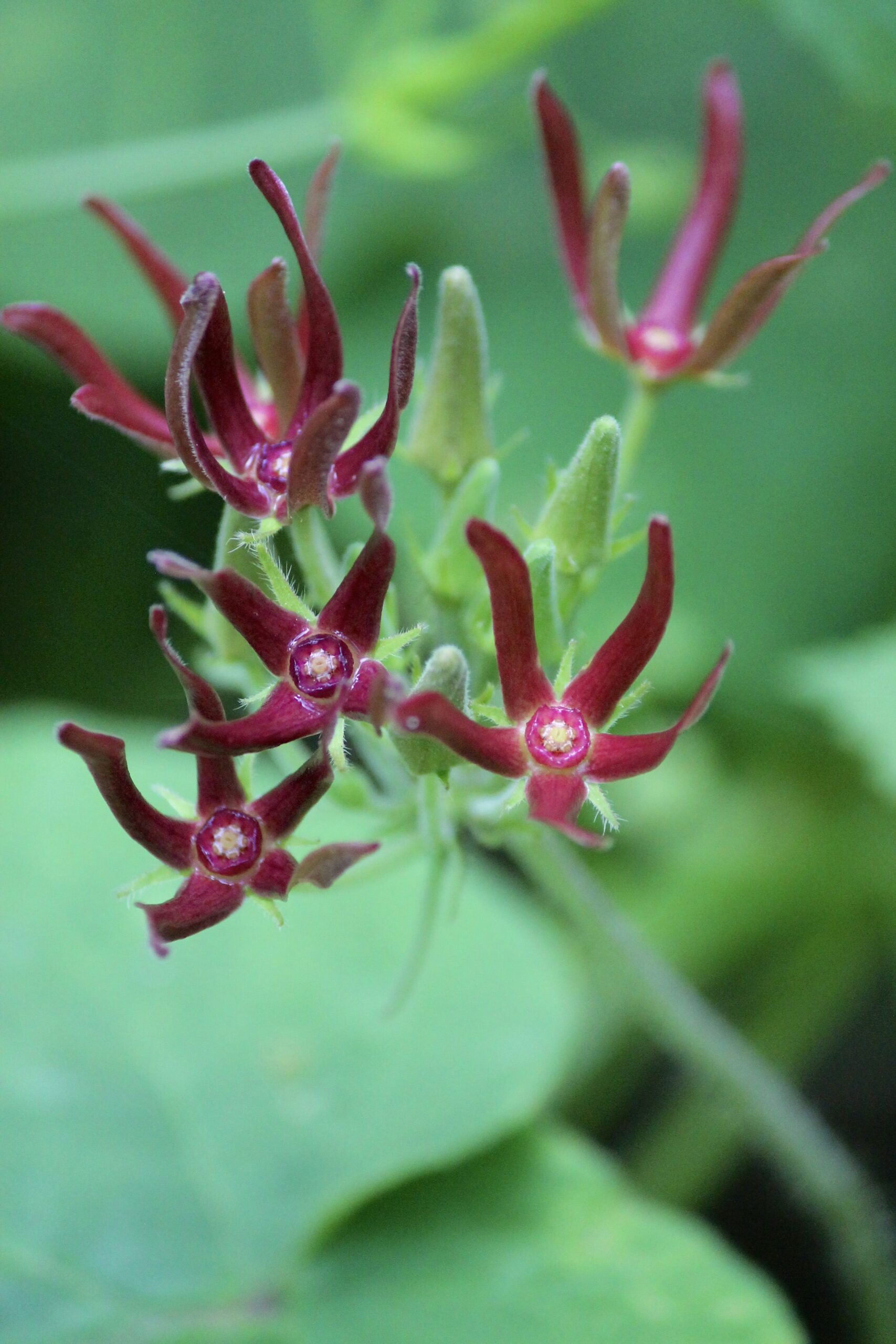
The early summer presented a very exciting opportunity to explore a property with climbing milkvine (Matelea obliqua). It was incredibly special to locate this plant because it is listed as endangered in Pennsylvania! We were so grateful to observe and collect data on this small population growing just down their road from our homes.
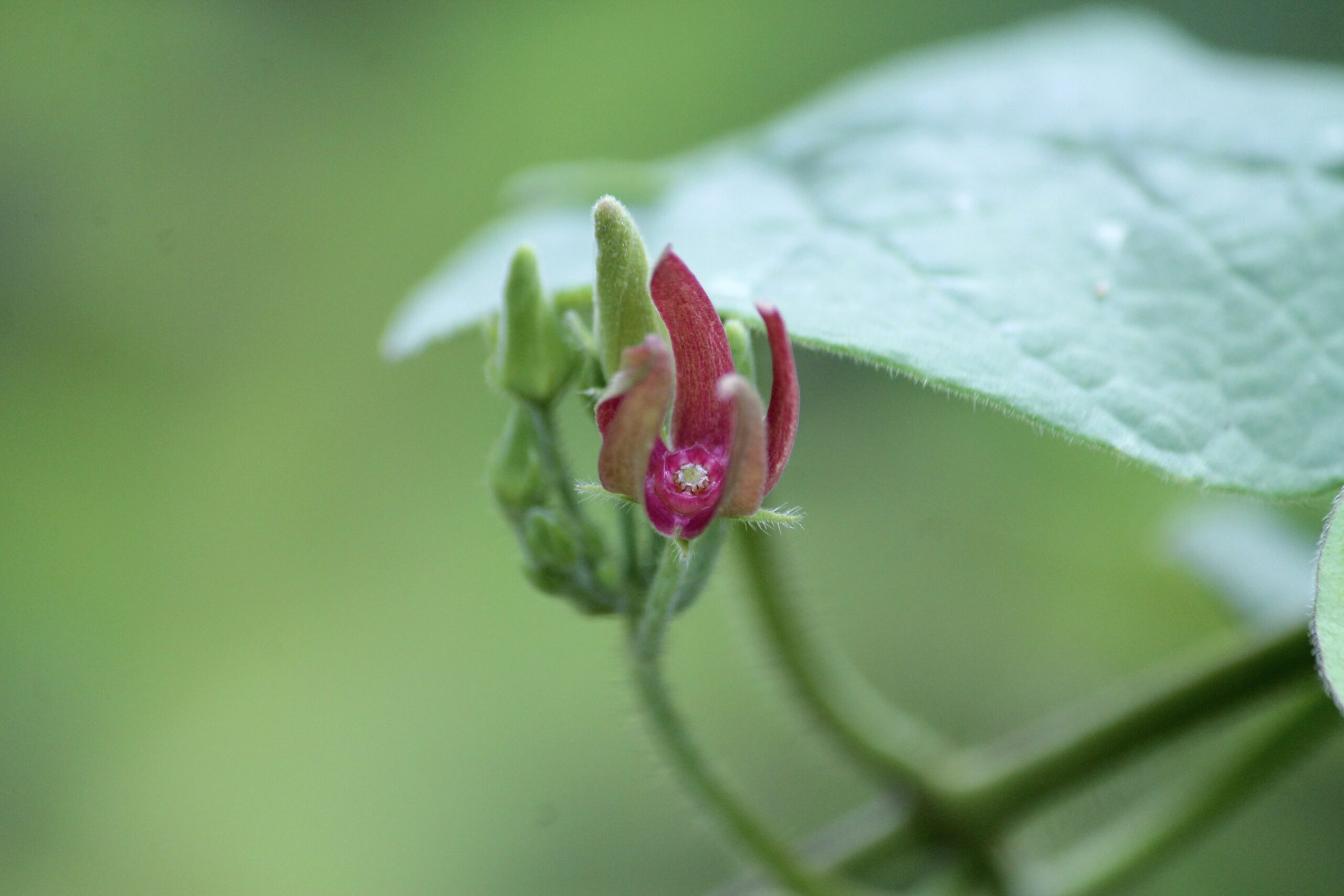
Climbing milkvine is in the same family as milkweeds and will release a sap when the stems are broken. The flowers are red to purple in color. The petals untwist and open up as they bloom. This creates beautiful forms of spiraled flowers. In the fall, the seed pods look very similar to milkweeds.
We found this small population of milkvine growing on a limestone ridge. This species thrives in unique habitats over calcareous rock.4 With the endangered status of this plant, Farren and Shelby will continue to monitor and protect this population of climbing milkvine!
Tuberous Grass Pink
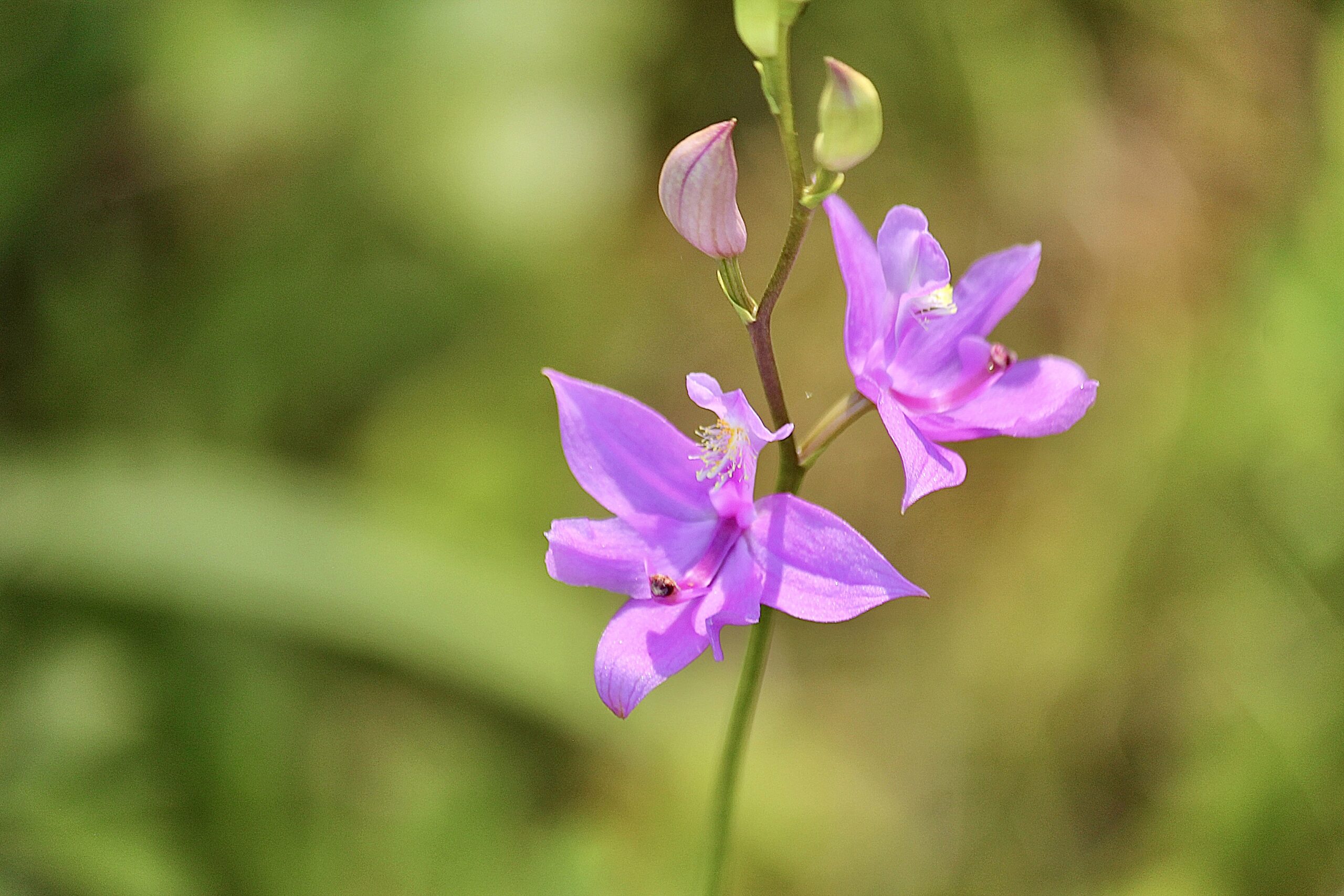
Amid a summer heatwave, we ventured out to northeast PA to visit a bog habitat. These sensitive wetland areas host species of plants, amphibians, reptiles, and insects that cannot be found anywhere else. Due to development, bogs are becoming increasingly rare. One of the special plant species Shelby and Farren got to see in bloom was tuberous grass pink (Calopogon tuberosus).
This is a native orchid species that stands out in the bog with its vibrant, pink bloom. The flower has unique characteristics with yellow, hair-like structures at the top meant to resemble pollen-covered stamens. 5 The pollinator lands on the bloom, hoping to collect nectar from the top, instead the pollen collects onto them at their abdomen on a tongue-like column in the middle of the flower.
Observing a fascinating wildflower like this in its natural habitat is wonderful, especially when the area is a protected preserve!
Zebra Swallowtail
While working at The Bower this year, we found many special animals. One of the animals we kept an eye out for was the Zebra Swallowtail (Eurytides marcellus). At The Bower, they have a stand of pawpaw trees (Asimina triloba) which are the host plant for these butterflies. As more and more butterflies filled the gardens, Shelby and Farren walked around the pawpaws carefully looking for signs of Zebra Swallowtails. Many attempts to find one were unsuccessful. One day, while clearing out an invasive plant in a nearby meadow, a zebra swallowtail swiftly flew by. Following after it, we were able to find it fluttering between butterfly milkweed (Asclepias tuberosa) and the pawpaw trees. Finally a sighting!
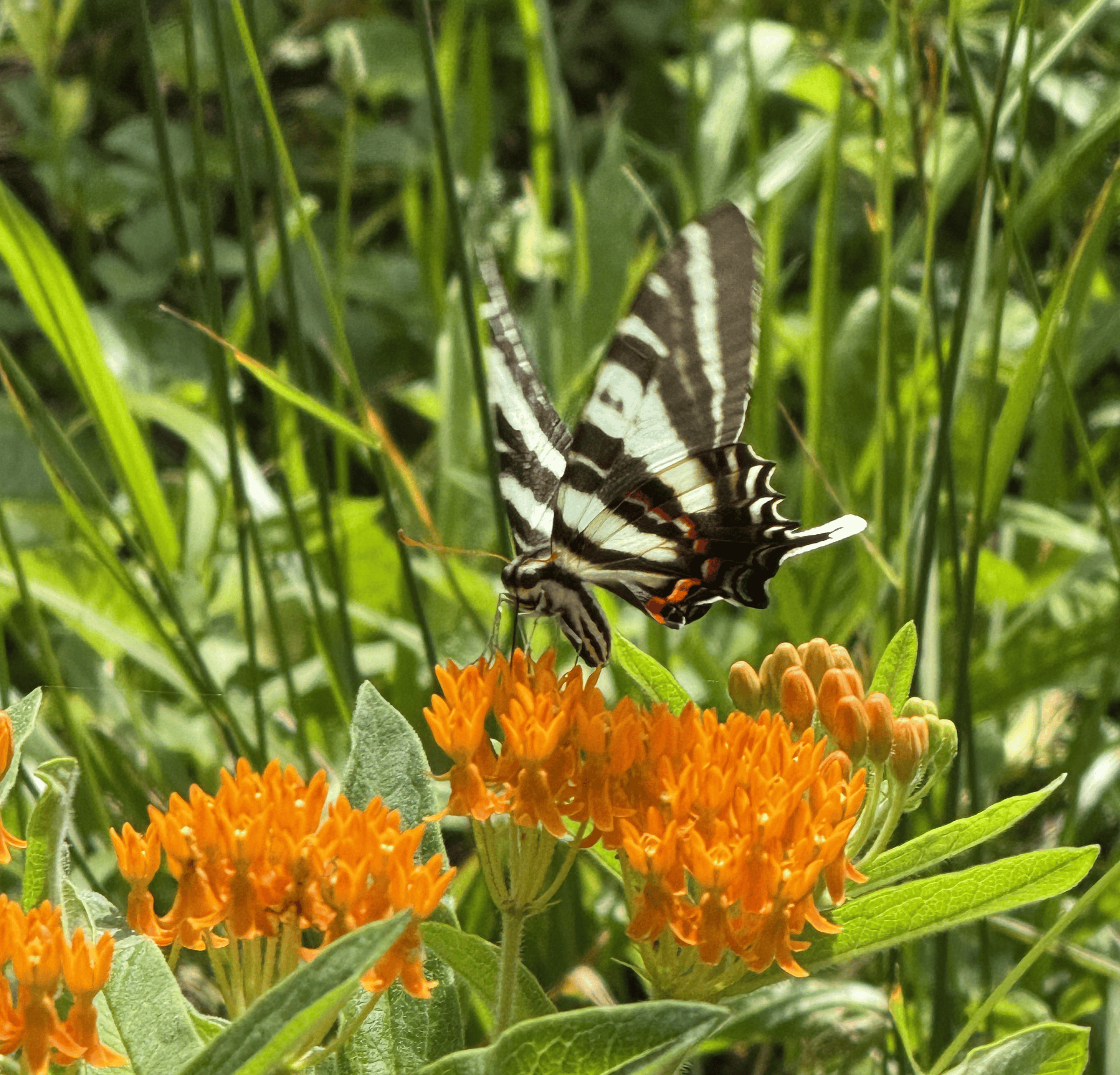
This particular swallowtail seemed to know when the camera was on it, and would take off immediately, flying unpredictably before landing on a new flowering plant. It was a thrilling observation to make and hopefully each year will bring more zebra swallowtails to The Bower’s pawpaws!
American Groundnut
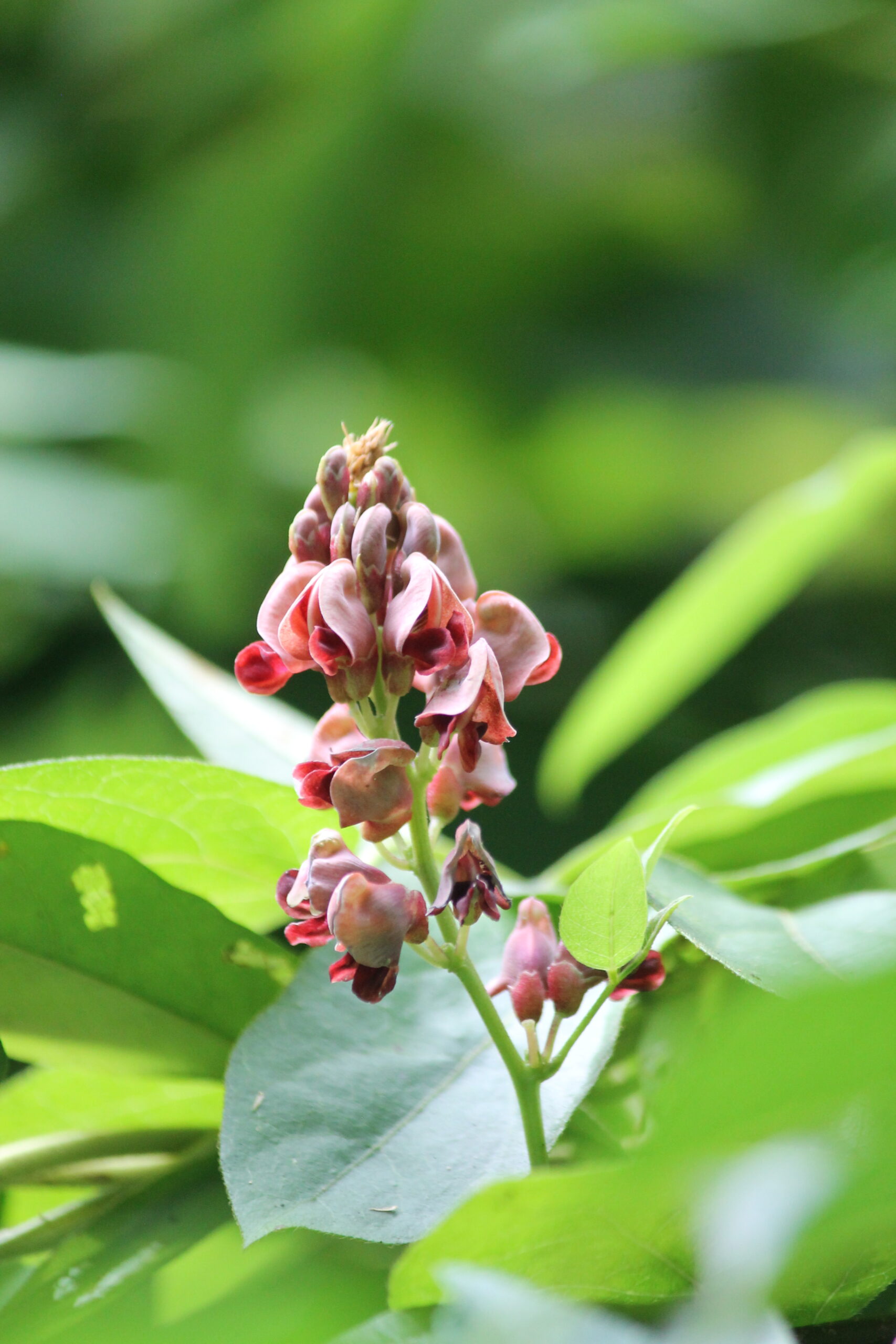
Shelby and her family have devoted a great amount of time and effort to battling invasives and restoring native species on their property. With every growing season, they discover new species of plants on their land. This year, amid the intense vines of the invasive Japanese honeysuckle, they found a native vine climbing above. American groundnut (Apios americana) was in full bloom.
This is a vine in the bean family and it grows rapidly in its proper habitat, making it a great contender for combatting invasives. The shape of the red flower is eye-catching and resembles wisteria. The name groundnut lends itself to another attribute of the plant. The American groundnut produces beans, or tubers, underground that can be foraged. The tubers are said to be delicious! A common way to prepare them is like a potato: mashed, fried, or baked.7 Finding new species on their land is one of the many fulfilling moments that Shelby and her family have as they work hard to improve habitats.
Monarch Chrysalis
The Feather and Fern team see lots of monarch caterpillars throughout the warm season. Typically, the caterpillars are very busy eating. They devour established milkweed plants, as well as the new milkweed that the team installs! As the caterpillars eat and grow, they’re pretty easy to spot. Shelby and Farren often check in on known caterpillars until one day they are no longer there. As the caterpillars get closer to the metamorphosis stage of their life cycle, they climb down from the milkweed and search for a safe spot to form their chrysalis. This can be a nearby tree, shrub, or plant that may offer protection. Usually on the underside of a leaf, the caterpillar will hang and form a chrysalis to transform into a butterfly.
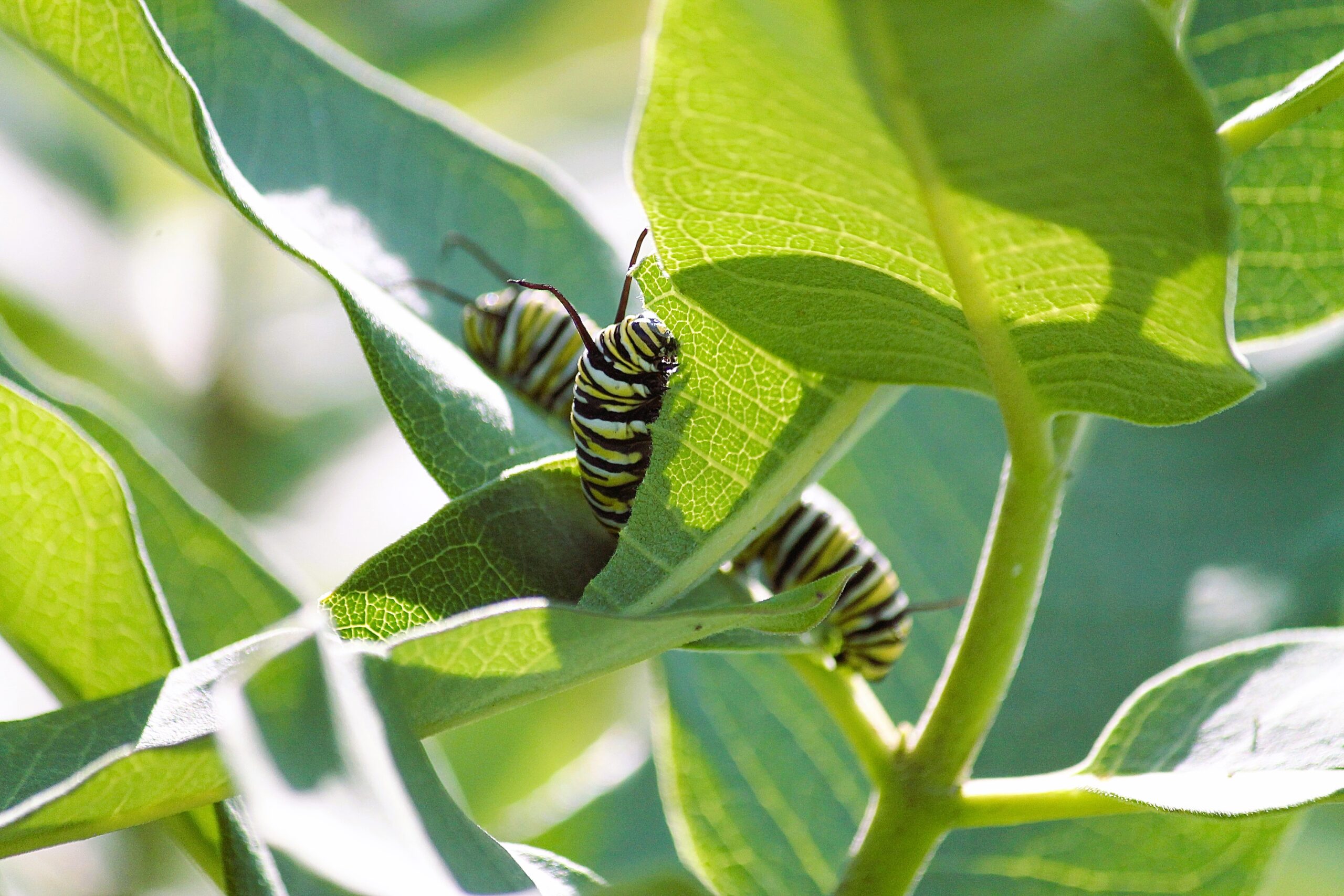
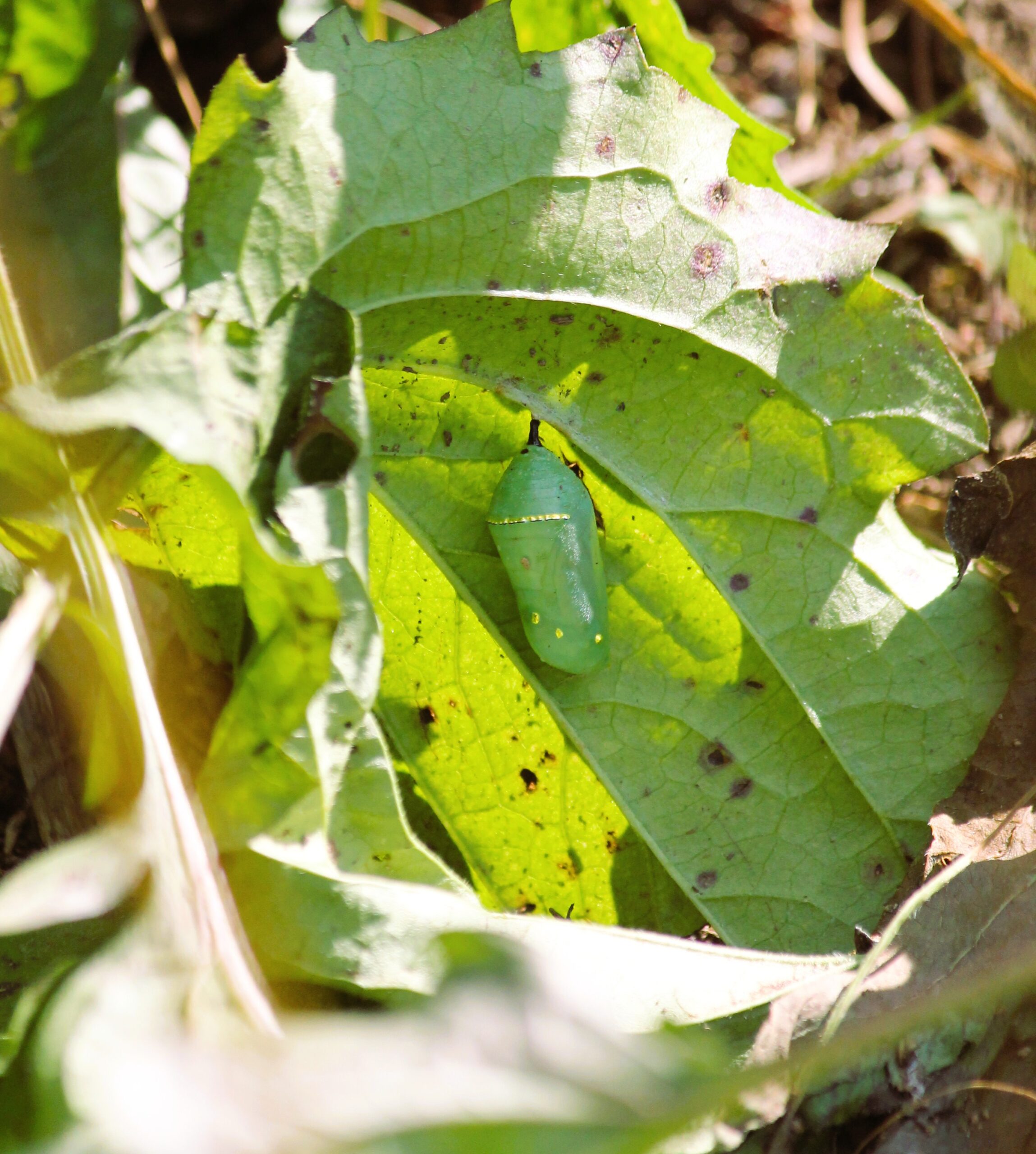
Chrysalises can be difficult to locate. Sometimes the caterpillar doesn’t leave their milkweed plant so you can find their chrysalis easily. Otherwise, it is kind of pure luck finding one. In one of a client’s gardens, we got quite lucky! After searching for a chrysalis from one of the local caterpillars who had disappeared, Shelby returned to weeding. After a short time, she was clearing out an area close to brown-eyed Susan’s (Rudbeckia triloba) and happened to put her hand down next to a leaf with a chrysalis hanging underneath. The caterpillar had to have traveled a few feet though plants before settling on this leaf! It was an unexpected find and a nice reminder that these animals have the instinct, we just have to provide the resources.
New Year, New Observations!
2025 offered great adventures, inspiring moments, and many cherished discoveries! The Feather and Fern team are excited to carry these into the new year. Cheers to the many observations yet to make!
Happy New Year!

We thank you for following along with Feather and Fern Wildscapes on this adventure! We’ll continue to use this blogspace to write about all things interesting and fun in the plant world. If you have questions about a certain plant or would like us to highlight a specific topic, comment below on any blog post and we’ll be sure to address it in a follow-up post! To keep up with us, sign up for our occasional newsletter and follow our social media channels as well – Instagram, Facebook, and LinkedIn.

1. Lady Bird Johnson Wildflower Center – The University of Texas at Austin [Internet]. www.wildflower.org. 2023. Available from: https://www.wildflower.org/plants/result.php?id_plant=trer3
2. Mink [Internet]. Pa.gov. 2025 [cited 2025 Dec 28]. Available from: https://www.pa.gov/agencies/pgc/wildlife/discover-pa-wildlife/mink#accordion-749be7206d-item-1bdc594f2e
3. Mink [Internet]. Minnesota Department of Natural Resources. Available from: https://www.dnr.state.mn.us/mammals/mink.html
4. Matelea obliqua (Northern Spinypod) – FSUS [Internet]. Unc.edu. 2022 [cited 2025 Dec 29]. Available from: https://fsus.ncbg.unc.edu/main.php?pg=show-taxon-detail.php&lsid=urn:lsid:ncbg.unc.edu:taxon:%7B377D870B-F4B4-4C3B-9A46-8B3F0709C72E%7D
5. Tuberous Grass Pink [Internet]. www.fs.usda.gov. Available from: https://www.fs.usda.gov/wildflowers/plant-of-the-week/calopogon_tuberosus.shtml
6. Zebra Swallowtail [Internet]. Chesapeake Bay Program. 2025. Available from: https://www.chesapeakebay.net/discover/field-guide/entry/zebra-swallowtail
7. Shaw H. American Groundnut – How to Identify, Grow and Cook Hopniss [Internet]. Hunter Angler Gardener Cook. 2014. Available from: https://honest-food.net/harvesting-eating-american-groundnuts/