
Taking Flight
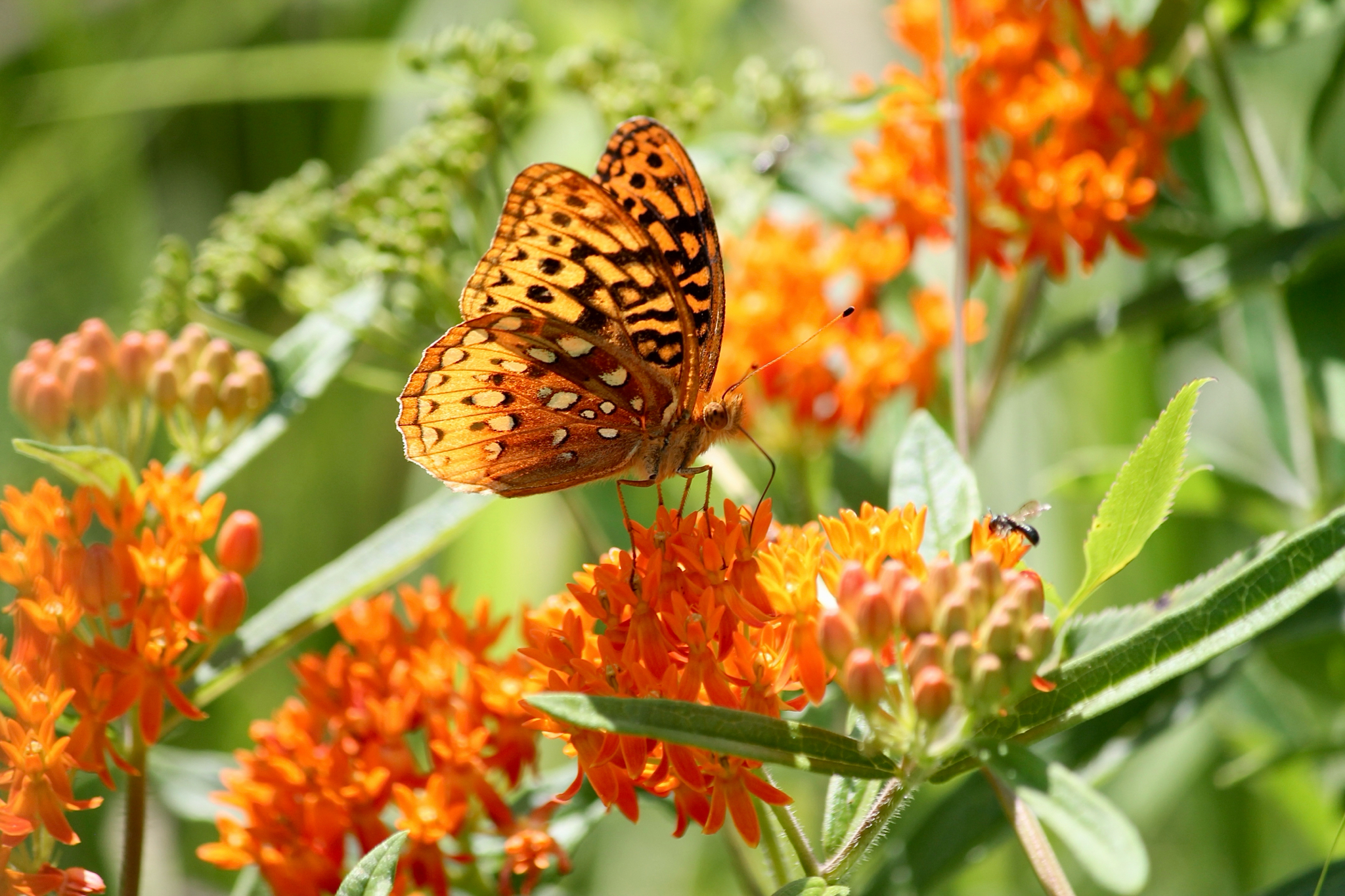
What has wings, likes flowers, and is covered in powdery dust? Pollinators!
By the end of June here in Central Pennsylvania, the trees create a dense canopy in the forest and the brightest blooms start to appear. Gardens become a bustling resource with all kinds of critters stopping by to take advantage. Buzzing and fluttering around as flowers begin to open, pollinators become a common sight. Since June is National Pollinator Month, let’s take a look at some of these creatures who may enjoy our gardens!
A Unique Find
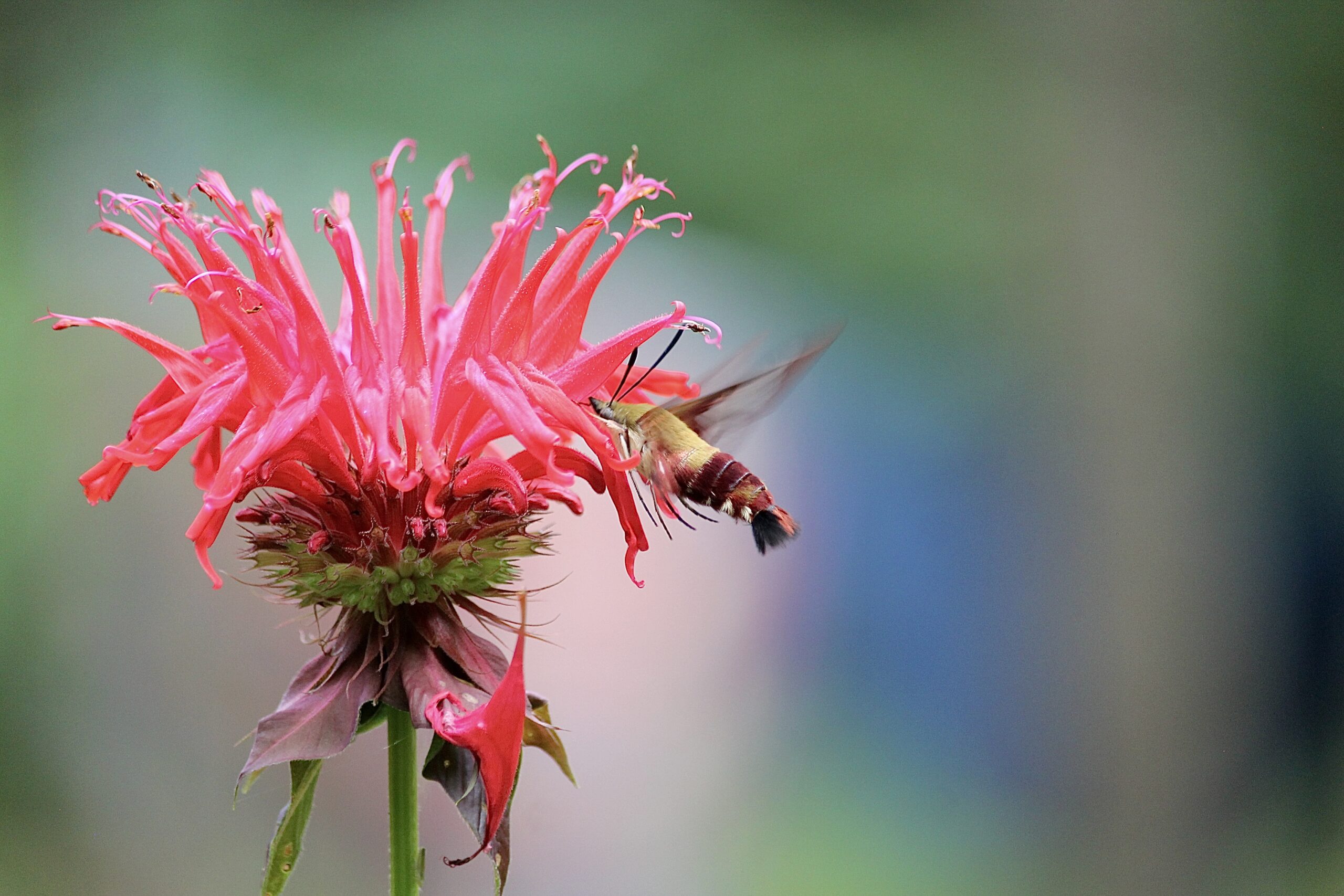
Often misidentified as an actual hummingbird, this insect is known as a hummingbird moth. Shelby’s garden, full of scarlet bee balm (Monarda didyma), attracts many of these unique moths. Similar to the bird, these moths dart and hover around flowers in search of nectar. This species pictured, the hummingbird clear wing (Hemaris thysbe), is one of the most common to see amongst the flowers during the summer. They are attracted to a wide variety of native plants, which means they will make appearances all season in gardens with continuous blooms. The hummingbird moths have a striking proboscis which curls up when they are not using it.1 The proboscis is an extension of the mouth on insects which is a long, hollow tube that acts like a straw for feeding. The moths will rapidly unfurl their proboscis before collecting nectar in the flower. Most moths are nocturnal, but the hummingbird moths are active during the day. This means there are plenty of opportunities to observe these insects!
Fluttering and Floating
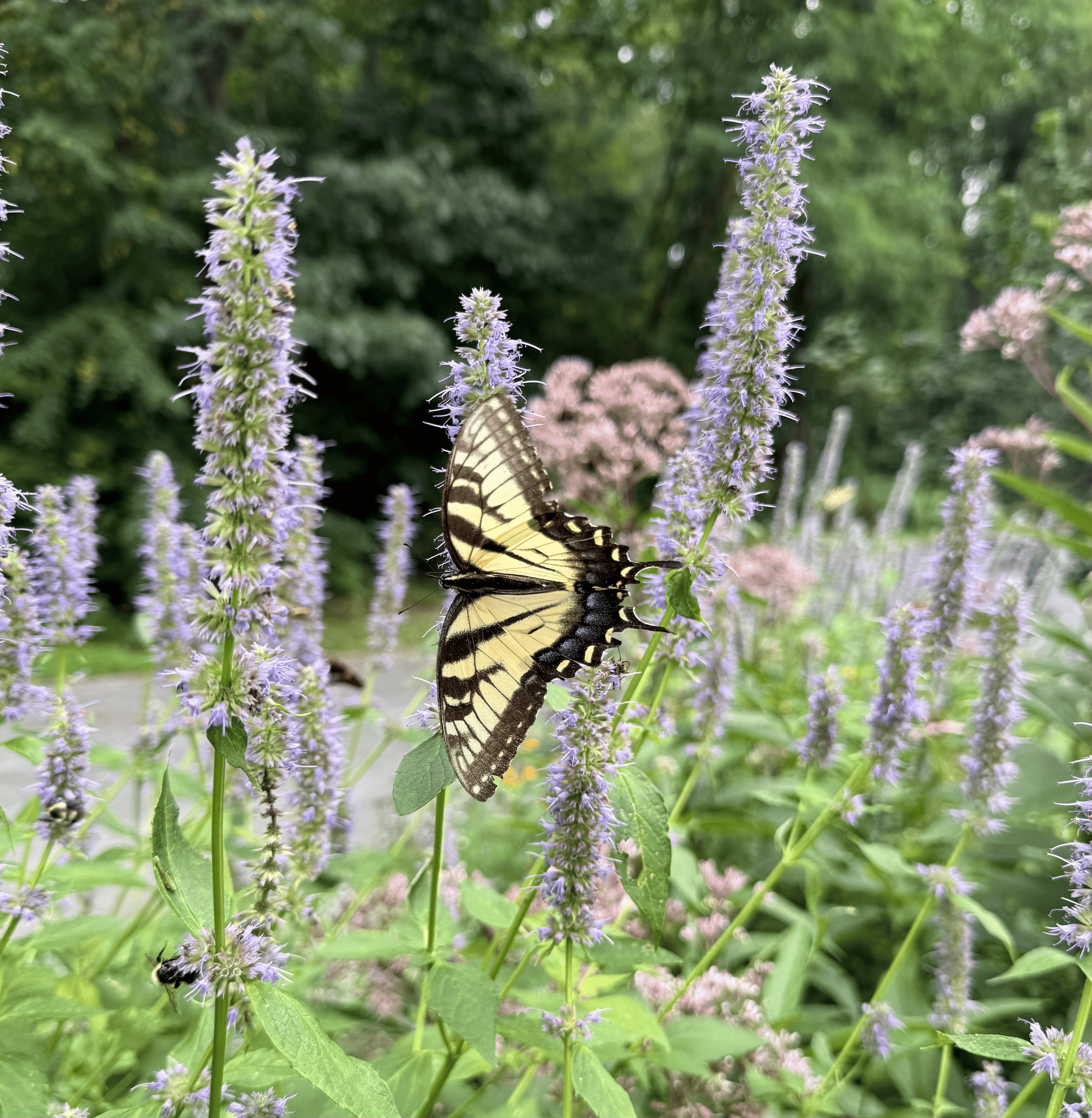
Butterflies are the most well known and beloved pollinators. The swallowtail butterflies, of the Papilionidae family, are easy to find and such a joy to watch! These butterflies are known for gracefully floating through the forest canopy. In our gardens, they wander from bloom to bloom in no rush. As they land, you can see the ‘tail’ at the end of each wing, which inspired their name.
A beautiful and common swallowtail species is the eastern tiger swallowtail (Papilio glaucus). These butterflies fly amidst the canopy of their host plants, trees! Eastern tiger swallowtails use tulip poplar trees (Liriodendron tulipifera), wild black cherry trees (Prunus serotina), and more as their hosts. Adult butterflies lay eggs on the tree leaves and when the caterpillar first hatches, they are brown and white, resembling bird scat! This is an effective camouflage that prevents predators from being interested in them. As the caterpillar grows, their colors change until they’re a vibrant shade of green with bright eyespots.2 The tiger swallowtails stop and visit many different kinds of wildflowers, so there’s a good chance you’ll see one visiting your pollinator garden this summer.
A Buzzworthy Pollinator
Cute? Check. Gentle? Check. Incredibly efficient at collecting pollen? Check.
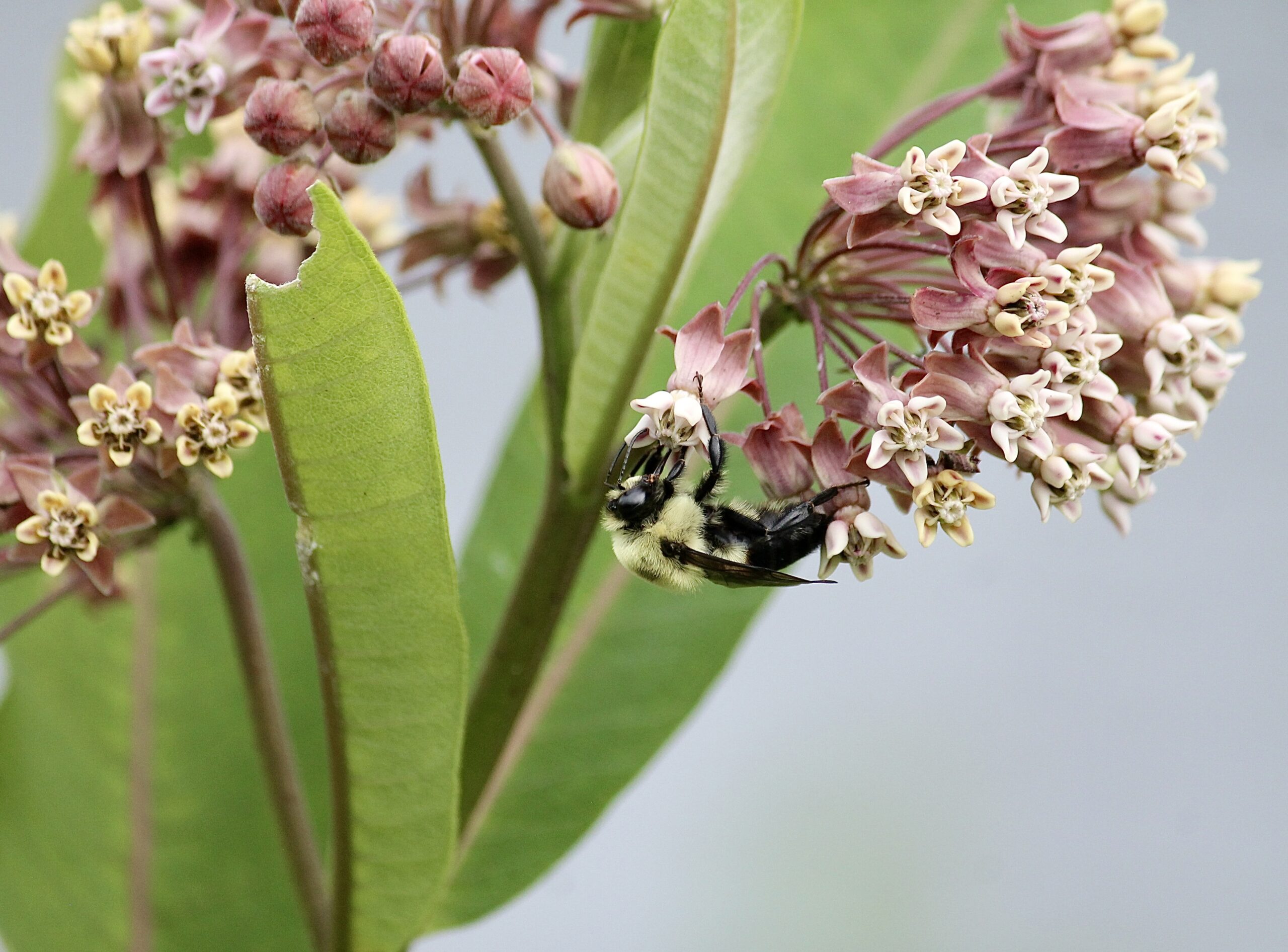
Bumblebees (Bombus spp.) have a reputation for being unbothered, gentle giants. They are frequent garden visitors who are easy to find buzzing around. If spot them in your garden, count yourself lucky! Bumblebees are crucial pollinators for native plants and crops. They are generalist species which means they do not have a singular host plant and will contribute to the pollination of countless plants.3
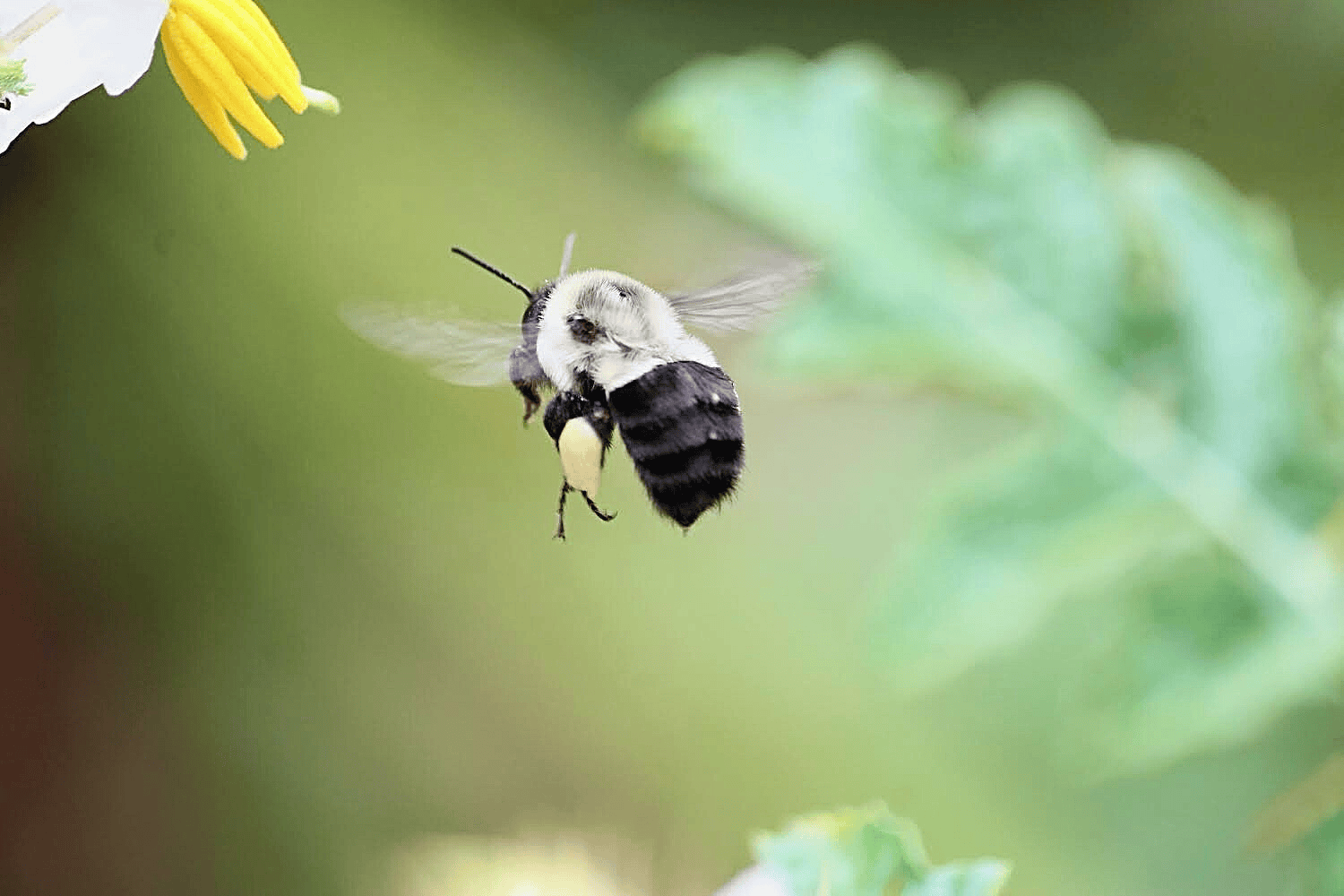
Bumblebees can collect pollen and store it in a tight ball on their hind legs. These storage areas, called pollen baskets, are concave and surrounded by stiff hairs.3 Bumblebees are able to access pollen that may be hard to reach and would never be released. They collect this pollen through a behavior called buzz pollination. On the flower, the bumblebee will grab the anther (the part that produces pollen) and vibrate its thoracic muscles. These thoracic muscles are responsible for powering their wings in flight. When vibrating with such force, pollen dislodges from the anthers and falls onto the bee.4 The bumblebees’ efforts to collect pollen allow for so many plants to make seeds!
A Unique Find
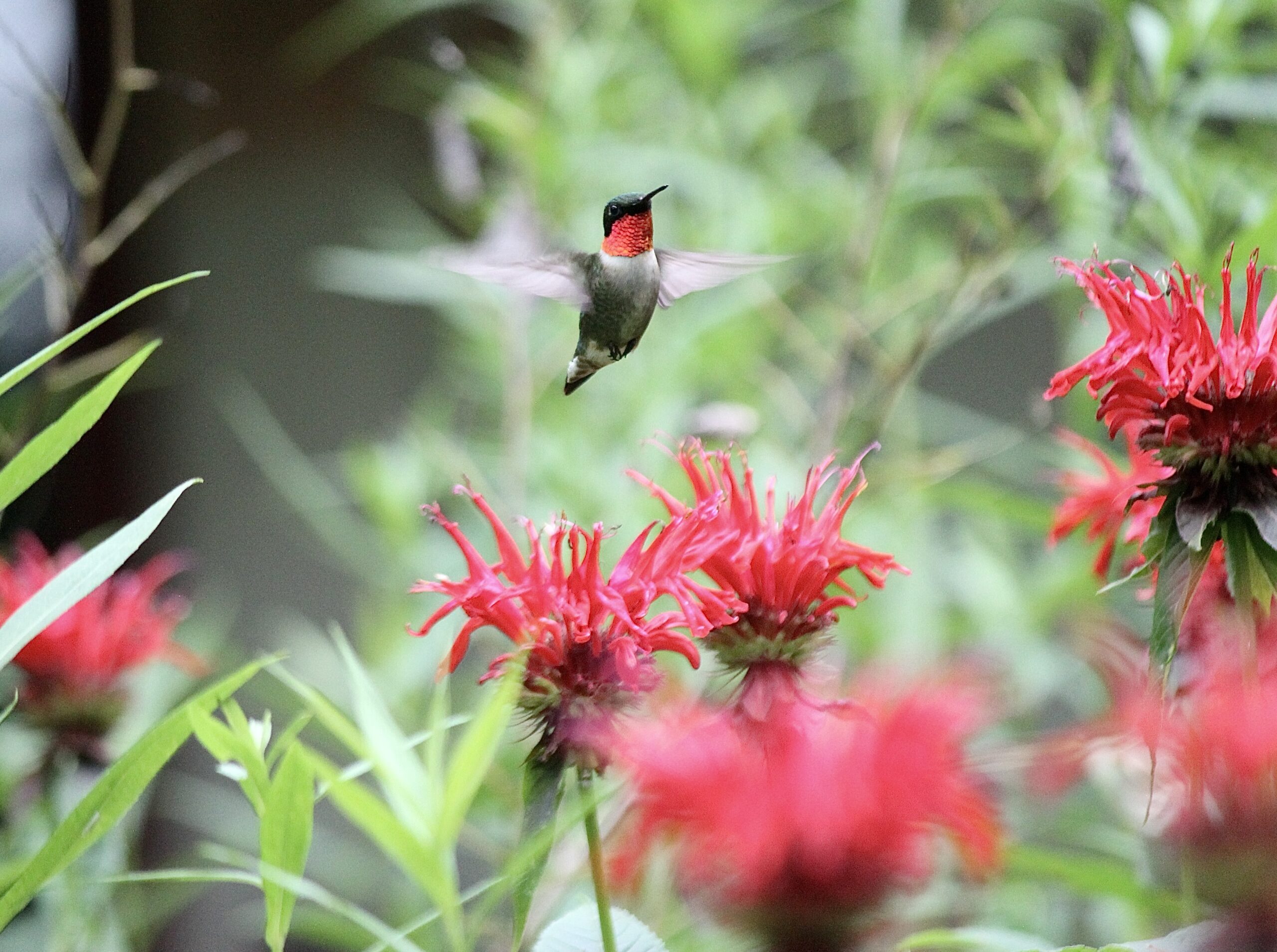
This time of year, you may catch a flash of red and hear the gentle whir of the ruby-throated hummingbird (Archilochus colubris). Their long, thin bill and iridescent feathers distinguish them from other birds. These tiny birds dart around from bloom to bloom, searching for nectar. While hovering above the flower to collect nectar, hummingbirds brush against the anther and pollen attaches to them. Then, off to the next flower they carry the pollen, collecting and transferring it among plants.5 Hummingbirds not only add excitement to the garden, but also contribute to its health with their consistent pollinating.
Protect Our Pollinators
One of the greatest threats to living things, including pollinators, is habitat loss. Our backyard gardens contribute to the vital resources that these animals depend on. The plants we choose can have meaningful impacts to our local pollinator populations! To learn more about the plants you can add to your garden and where to find them, visit the Pennsylvania Native Plant Society.
There are countless ways that you can support pollinators year round. From pesticide use to creating winter habitats, there are many resources available to teach gardeners how to improve their practices for pollinators. Find helpful resources and guides at the Pollinator Partnership.

We thank you for following along with Feather and Fern Wildscapes on this adventure! We’ll continue to use this blogspace to write about all things interesting and fun in the plant world. If you have questions about a certain plant or would like us to highlight a specific topic, comment below on any blog post and we’ll be sure to address it in a follow-up post! To keep up with us, sign up for our occasional newsletter and follow our social media channels as well – Instagram, Facebook, and LinkedIn.

1. Hummingbird Moth, Hemaris thysbe [Internet]. Wisconsin Horticulture. Available from: https://hort.extension.wisc.edu/articles/hummingbird-moth-hemaris-thysbe/
2. Eastern Tiger Swallowtail [Internet]. www.fs.usda.gov. Available from: https://www.fs.usda.gov/wildflowers/pollinators/pollinator-of-the-month/TigerSwallowtail.shtml
3. About Bumble Bees [Internet]. Xerces Society. 2014. Available from: https://xerces.org/bumble-bees/about
4. Pritchard DJ, Vallejo-Marín M. Buzz pollination. Current Biology [Internet]. 2020 Aug;30(15):R858–60. Available from: https://www.sciencedirect.com/sdfe/pdf/download/eid/1-s2.0-S0960982220307740/first-page-pdf
5. National Park Service. Pollinators – Hummingbirds (U.S. National Park Service) [Internet]. Nps.gov. 2015. Available from: https://www.nps.gov/articles/hummingbirds.htm